 unknown | en

Blog Post
Sweet Spots
Aug. 19, 2026
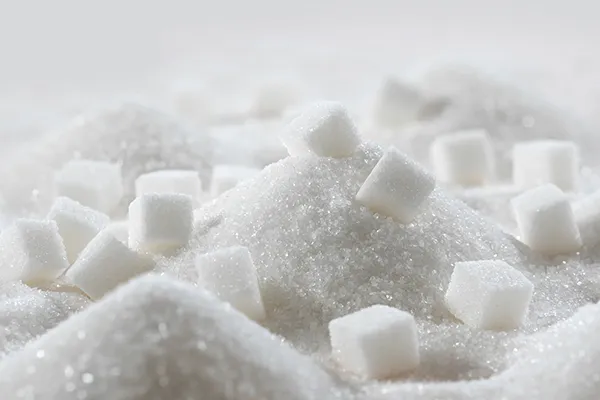
Imagine a world without refined sugar. No candy, no jam, no pickles. Bread rises with difficulty without sugar to boost the yeast. Medicines become a challenge to swallow in their unadulterated state. Forget that morning doughnut. In recent decades, high fructose corn syrup and artificial sweeteners (from saccharine to Splenda® and aspartame) have made inroads into the sugar market. Yet old-fashioned sugar has prevailed.
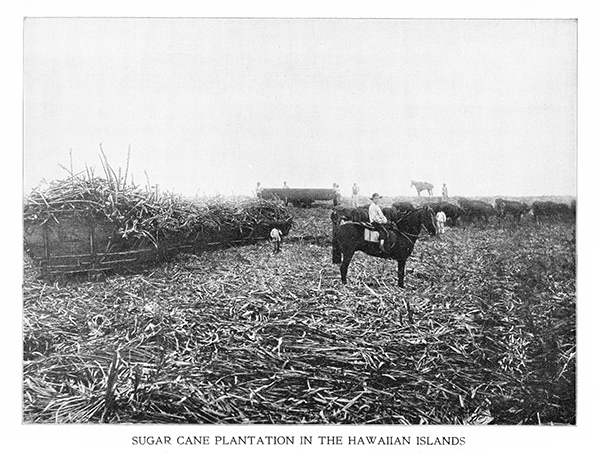
Photo courtesy of iStock, Christine_Kohler
History of Sugar
Sucrose has been part of the human diet for more than 12,000 years. It was first processed in India and brought to England in the 13th century. There it was used as both a spice and for medicinal purposes. In the 15th and 16th centuries, both sugar and honey were used as sweeteners, but by the 18th century sugar claimed its space as the chosen sweetener.
In the United States, sugar refining from cane began in earnest in Louisiana in the late 18th century, with an influx of expert planters and refiners who were fleeing Haiti after its revolution. By 1812, Louisiana boasted 75 sugar mills. Sugar beet production was attempted in the U.S., mostly on the East Coast, soon after, but failed to flourish. It wasn’t until 1870 that the first successful sugar beet factory was established in central California. By 1917, the U.S. operated 91 sugar beet factories in 18 states. Today, there are 22 sugar refineries in 11 states.
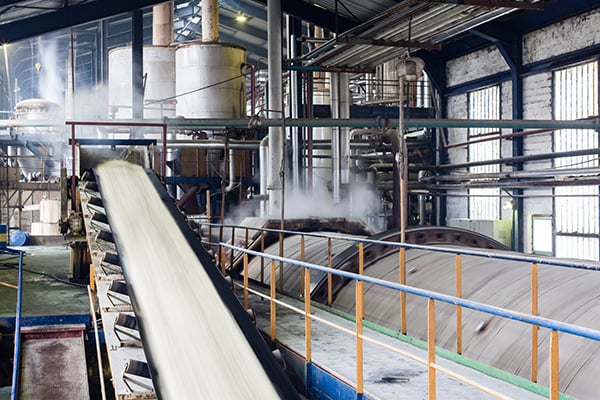
Transport of sugar on the production line; Photo courtesy of iStock, Avatar_023
Refining: From Field to Factory
On paper, the process of making sugar sounds easy: You simply remove sucrose from the sugar beet or cane and then separate molasses, a byproduct, from the raw sugar. In reality, the process is a lot more complicated and slightly different for each product being produced. Sugar beet harvesting is nearly 100% mechanical worldwide, whereas sugar cane harvesting varies, with developing countries more apt to use more manual labor.
Although sugar beet refineries operate year-round, the process begins in earnest in the U.S. and in most international beet-growing locations with the October harvest, when sugar beets are harvested by machine.
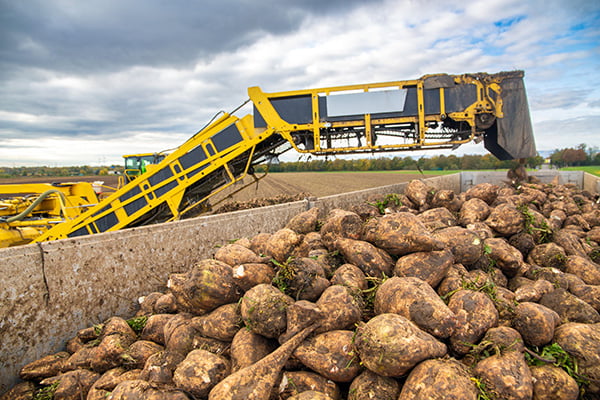 Loading sugar beets; Photo courtesy of iStock, U. J. Alexander
A defoliator removes the green tops and slices a portion from the top of the beet, which contains a high level of impurities, while a pinch wheel harvester pulls the beets from the soil at the root. Beets are weighed, and a sample is tested for sugar content, which can vary between 10% and 20%. Then, the beets are moved to storage and stacked in piles measuring 18 feet tall and 1,500 feet wide. Although beet sugar refineries are busiest during the fall harvest, technology has made it possible for beets to be kept under controlled conditions for up to six months so that refining can occur throughout the year.
In preparation for extraction, beets are washed several times before being sliced by large drum slicers (industrial graters equipped with pairs of rotating opposed groove knives) into thin strips called cossettes, making them look a little like raw shoestring French fries. The cossettes are placed in large diffuser tanks filled with hot water and then agitated in a process called countercurrent flow—this extracts sugar, turning the water into a thick liquid mix of water and sugar.
To remove impurities in the juice, a slurry of calcium hydroxide called “milk of lime” is added and then the entire mixture is carbonated in large tanks for 20 minutes to an hour. The milk of lime bonds with the impurities and is filtered out, leaving a thin syrup, which is first evaporated and then crystallized and spun in a centrifuge to dry. The result is refined white sugar; the byproduct is molasses. Some of the molasses is sold as food grade.
In a process called molasses de-sugarization, a small quantity of molasses is run back through the system for further extraction, which often yields around 10% more sugar. The largest portion is sold to supplement cattle feed (yes, cows have a sweet tooth, too).
 Close-up of harvested sugar cane; Photo courtesy of iStock, PhanuwatNandee
Unlike sugar beet production, cane refining is a two-step process that takes place at sugar cane mills and then at cane refineries. The first step in cane sugar refining is extraction, where the crystals are spun in a centrifuge to separate them from the liquid. Next, the raw sugar, an inedible product that results from cane extraction, is sold to cane refineries, where it will be turned into 40 different sugar products—including white, confectioners, and various browns—and sold.
Global Sugar Production
Sugar is produced on six continents and in more than 100 countries. The top sugar producing countries are:
- Brazil: 43.8 million metric tons
- India: 30 million metric tons
- European Union: 15.52 million metric tons
- China: 12.6 million metric tons
- Thailand: 11.26 million metric tons
- U.S.: 8.38 million metric tons
- Pakistan: 7.06 million metric tons
- Russia: 7 million metric tons
- Mexico: 5.49 million metric tons
- Australia: 3.83 million metric tons
Dixon Products for Sugar Manufacturing
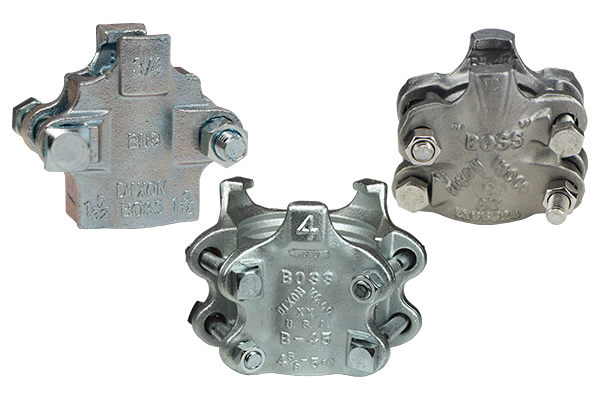 Details
- 2, 4, and 6-bolt type
- 2, 3, 4, or 6-gripping fingers
- Recommended for steam service up to 450°F (232°C)
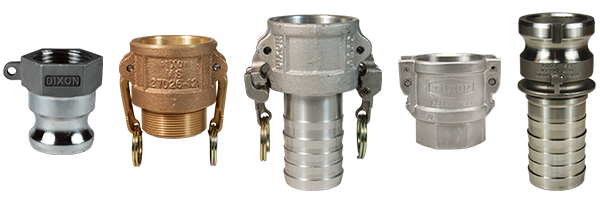 Details
- Precision machined to rigid tolerances
- Durable stainless steel cam arm pins will not rust or bind, providing greater strength and safety
- Recess holds gasket firmly in place - ensures proper placement
- King Crimp shank design as well as traditional shank design for banding is available

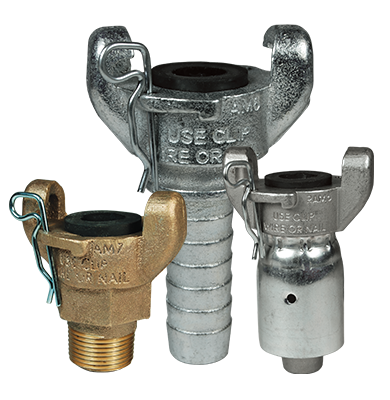 Details
- Recommended for use on air lines for virtually any type of pneumatic equipment
- Universal head that is identical for all parts (hose ends, male NPT, and female NPT) within the 1/4” to 1” range
- Banded or permanently attached
- Ferrules can be swaged or crimped depending on coupling installation requirement
- Maximum working pressure: 150 PSI at ambient temperature 70°F (21°C)
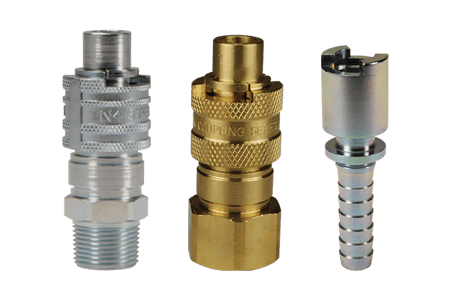
Details
- Full flow coupling used on utility, air, water, and nitrogen lines as well as pneumatic tools
- Convenient push-twist-click connection
- Locking sleeve offered to enhance safe, reliable connections
- Temperature range: -40°F to 250°F (-40°C to 121°C)
- Pressure rating: 300 PSI in brass, 500 PSI in steel and 303 stainless steel at ambient temperature 70°F (21°C)
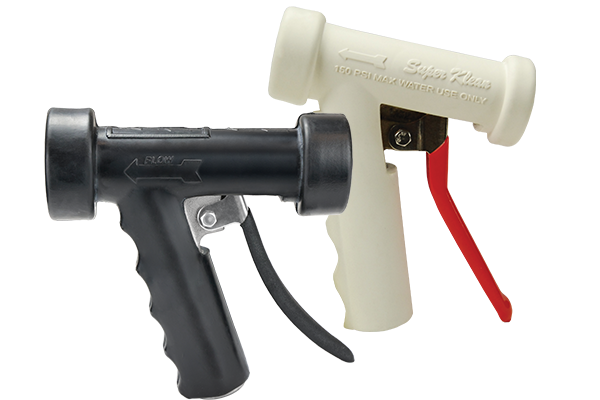 Details
- For low pressure cleaning (150 PSI)
- Standard (1/2” female NPT inlet) and lite (3/8” female NPT inlet)
Summary
Consumers across the U.S. and around the world can choose from white, brown, confectioners, and other specialty sugars in their supermarkets and the industry continues to introduce new products and packaging. Although the sugar industry continues to face competition from artificial sweeteners as people worldwide face the conundrum of trying to cut calories without eliminating sweetness, sugar will never completely go away.
For more information, visit dixonvalve.com or call 877.963.4966.
